Define What Equivalent Means
An equivalent refractory board is one that delivers acceptable performance in your specific non-ferrous casting process. It is not simply a board with the same color, thickness or nominal density. Performance depends on the metal, temperature, reinforcement system, component geometry and maintenance practices.
Use an application specification to define equivalence. Include the dimensions, operating conditions, critical material properties and production acceptance criteria. This prevents a procurement comparison from being reduced to price per sheet.
Identify the Metal and Process Chemistry
Non-ferrous casting includes different metals and alloys, and a material suitable for one application is not automatically suitable for another. Even within aluminum casting, alloy chemistry and the use of cleaning agents, fluxes or salts can influence material behavior.
Tell the supplier which alloy families are processed and whether the component encounters flux residue, degassing treatment or aggressive cleaning chemicals. If the alloy or process changes regularly, qualify the board for the most demanding credible combination rather than a convenient average.
Understand Reinforcement and Atmosphere
Some casting boards use reinforcement or additives to improve handling strength and thermal performance. These formulations can behave differently in oxidizing, inert or reducing conditions. A composition suited to one furnace environment may not retain the same properties in another.
Request a technical description sufficient to understand the material's limitations, together with a current safety data sheet. Avoid assuming that every high-density calcium silicate board has identical fiber content, composition or environmental classification.
Build an Acceptance Matrix
A practical qualification matrix separates mandatory requirements from desirable improvements. Mandatory items may include dimensional fit, safe handling, temperature capability and acceptable chemical compatibility. Desired improvements may include faster machining, lower cleaning labor or longer campaign life.
Set measurable limits for each critical item. For example, define an acceptable dimensional change after a specified exposure, a maximum crack condition and a minimum completed production campaign. The exact limits should reflect the part's function and consequences of failure.
Check Batch Consistency
One successful sample does not establish reliable supply. Ask how the supplier controls density, thickness, surface condition and machining quality between production batches. Where relevant, request lot identification and inspection records.
For critical components, agree which properties will appear on the inspection certificate. A traceable lot number allows maintenance teams to connect a field failure to the supplied batch and investigate changes in material or processing.
Test the Finished Component
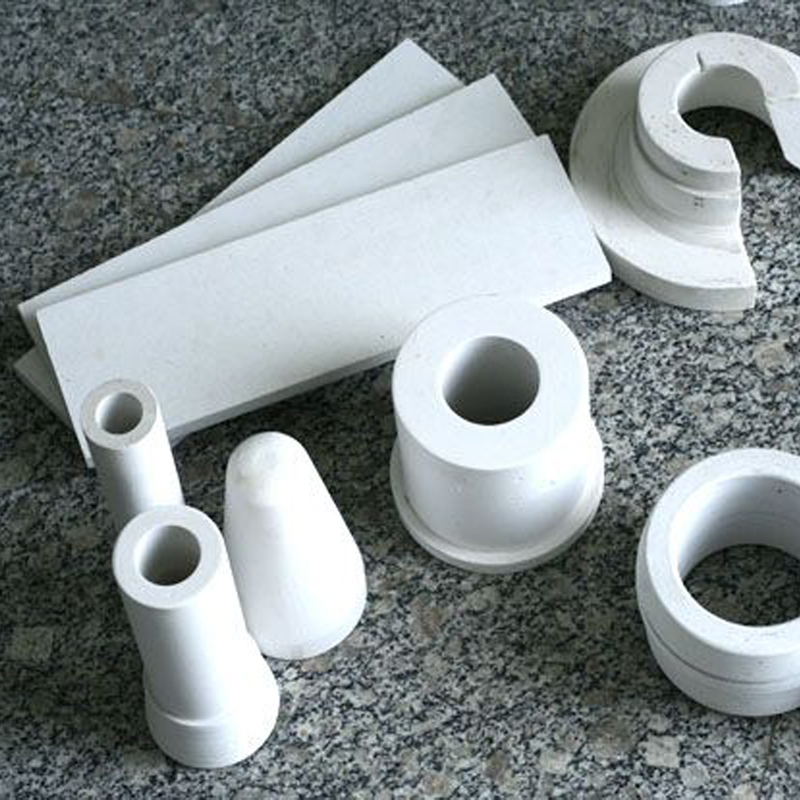
Sheet-level data cannot capture every risk in a finished part. Drilled holes, narrow bridges, thin edges and abrupt changes in section can create stress concentrations. Inspect the machined component before evaluating its furnace performance.
Use a representative component for the trial rather than relying only on a small coupon. Coupons can support screening, but actual mounting, loading and thermal gradients often determine service life.
Compare Campaign Economics
Track the complete campaign cost: part purchase, machining, freight, inspection, preheating, coating, installation, cleaning and downtime. Include the number of acceptable operating hours or production cycles achieved.
An equivalent board can be commercially attractive even if the sheet price is higher, provided it reduces breakage or installation time. Conversely, a cheaper board may be unsuitable if inconsistent dimensions cause frequent rework or operating interruptions.
Approve Supply in Controlled Stages
After a successful trial, approve a limited production batch before a full conversion. Keep the specification, drawing revision and processing instructions consistent. Retain records of the trial conditions so later results can be compared fairly.
Ask the supplier to notify you before significant formulation or manufacturing changes. A qualification is meaningful only when the supplied material remains consistent with the material that was tested.
Practical Buyer Checklist
How will repeat supply be controlled? Include lot identification and material revision in the purchase specification. Ask which properties are routinely checked and which are supported by type testing. Distinguishing the two avoids expecting a full qualification test on every shipment.
Agree a change-notification process with the supplier. A change in reinforcement, binder, curing or machining practice may affect service even if the commercial grade name remains the same. Maintain a clear record of the approved version.
Before ordering, request the current technical data sheet, safety data sheet, proposed drawing revision and written application limitations. Confirm whether the quotation covers raw board, finished machining, inspection and packaging. Ask which information is still needed to make a reliable recommendation.
For a production evaluation, define a responsible technical contact and a documented acceptance procedure. Follow established furnace and molten-metal safety rules. Do not introduce an unqualified material directly into a critical location merely because a sample is easy to machine or has an attractive quoted temperature rating.
Inspect the Complete Assembly
Review the component together with its supports, adjoining insulation, joints and exposed surfaces. A material can meet its individual specification yet fail when installed against an uneven frame or subjected to an unintended concentrated load. Check the complete assembly before assigning the cause to the board itself.
Agree what the inspection team will measure at receipt and after a trial. Useful observations include dimensional fit, visible cracking, edge condition and the position of deposits or wear. Record operating hours and process changes alongside those observations so that different trials can be compared on a consistent basis.
Keep the acceptance criteria proportional to the application risk. A non-critical backing panel and a component whose failure could release molten metal should not receive the same approval process. Escalate safety-critical changes to the equipment owner and appropriately qualified engineering personnel.
Request an Application Review
For equivalent board qualification, prepare a short application brief covering the drawing, operating temperature profile, metal or furnace atmosphere, contact duration, applied load and current service problem. Add photographs showing both the installed arrangement and the condition of a used component.
Request a grade recommendation with its assumptions stated clearly. Ask for achievable machining tolerances, inspection options and a sensible trial plan. A technically complete inquiry helps a manufacturer quote the right component and reduces the risk of ordering an unsuitable board solely on price.
Frequently Asked Questions
Does equivalent mean chemically identical?
Not necessarily. A different formulation may satisfy the application, but its relevant performance and limitations must be demonstrated.
Can an aluminum casting board also handle other metals?
Do not assume so. Confirm compatibility separately for the metal, temperature, atmosphere and exposure conditions involved.
Is a sample coupon enough?
It can help with initial screening, but a finished-component trial is usually needed when shape, loading and mounting influence failure.
What should the supplier confirm?
Ask for the proposed grade, technical data, safety information, batch controls, machining capability and the basis for application suitability.