Why Launder, Spout and Float Components Fail
Aluminum launders, spouts and floats operate in one of the most demanding areas of a foundry. They are exposed to molten aluminum, metal flow, oxide dross, thermal cycling, mechanical handling and frequent cleaning.
Common failure modes include aluminum build-up, surface erosion, edge chipping, cracking, dimensional change and loss of dimensional accuracy. These problems can disturb metal level control, reduce casting quality and increase maintenance time.
The best material is not necessarily the densest or the highest-temperature product. It is the material that best matches the specific function of the component and the severity of the operating environment.
Main Requirements for Aluminum Contact Components
A good launder, spout or float material must resist wetting by molten aluminum. If aluminum adheres to the surface, it can restrict flow, create dross and make cleaning difficult.
The material must also maintain dimensional stability. A float that changes shape can affect metal-level control, while a spout or launder liner that warps can create uneven flow and turbulence.
Thermal-shock resistance is equally important. Components may be heated and cooled repeatedly during production campaigns, cleaning and maintenance. A material that cracks after several cycles will require frequent replacement.
High-Density Calcium Silicate Board
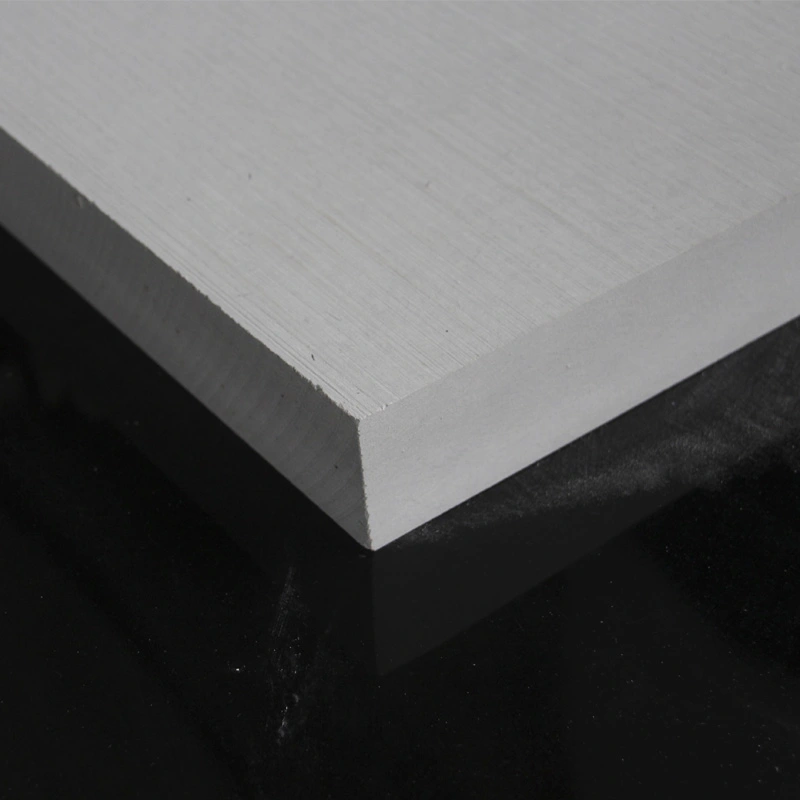
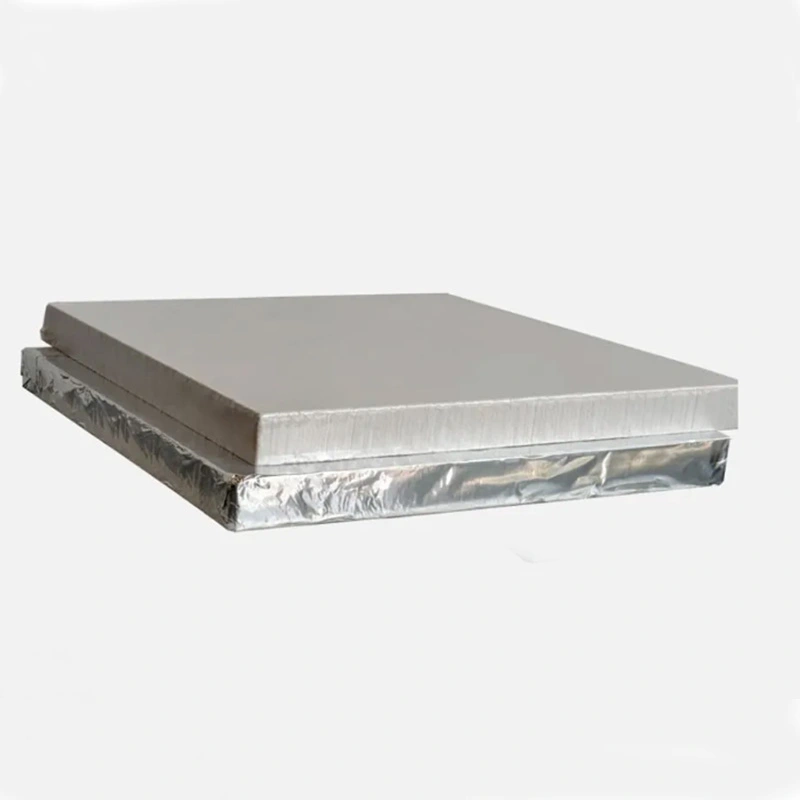
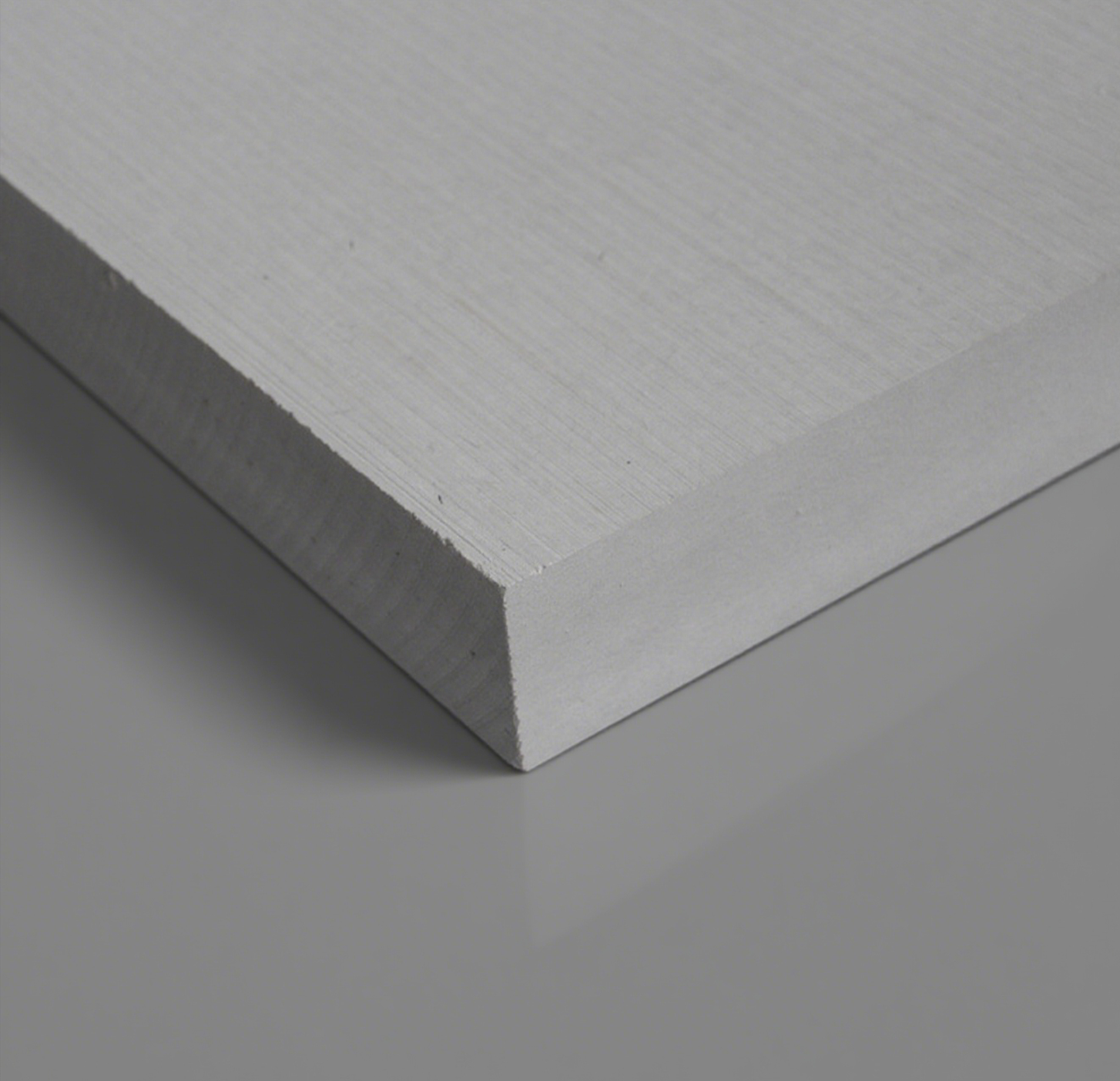
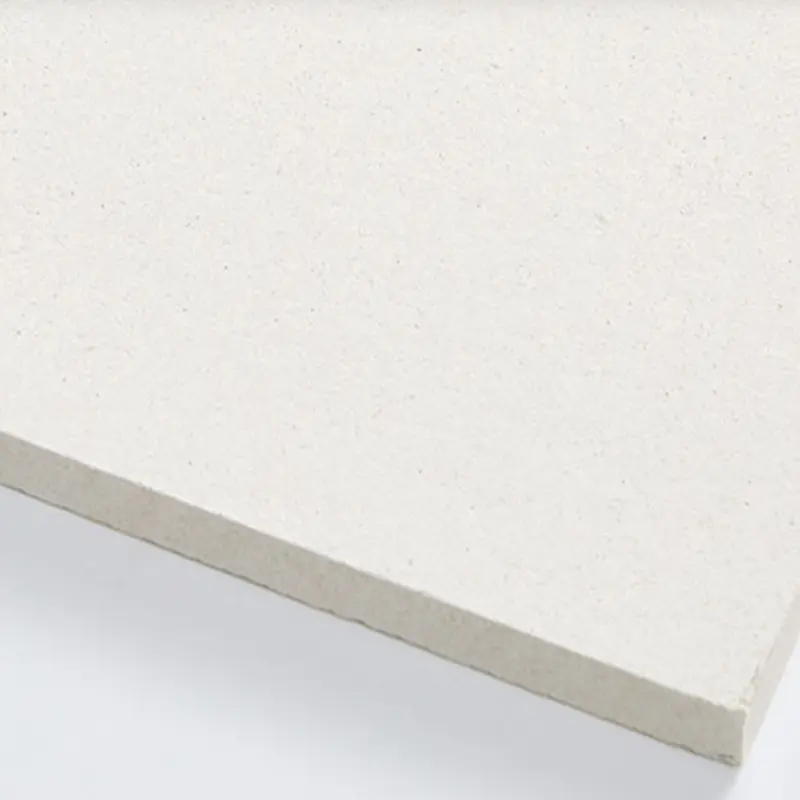
High-density calcium silicate board is widely used for aluminum launder liners, spouts, floats, dams and related components because it combines non-wetting behavior, mechanical strength, low thermal conductivity and machinability.
Its dense structure helps limit aluminum penetration, while its strength allows it to be made into load-bearing and dimensionally accurate parts. It can be cut, drilled, milled and shaped into custom launder sections, angled spouts and stepped float blocks.
For many foundries, the ability to purchase finished, CNC-machined parts is a major advantage. It reduces on-site cutting, improves assembly accuracy and lowers the risk of damage during installation.
Graphite and Carbon-Containing Materials
Graphite-containing refractory materials can offer excellent non-wetting performance because aluminum does not readily wet graphite. They are often used in components where metal adhesion must be minimized.
However, graphite materials may oxidize at high temperature in air, so their suitability depends on furnace atmosphere, temperature and exposure conditions. They may also be more brittle and require careful handling.
Graphite or boron nitride coatings are sometimes applied to calcium silicate or ceramic components to improve release performance. These coatings can be effective, but they wear over time and must be inspected as part of routine maintenance.
Castable Refractories
Castable refractories are used where complex shapes, structural strength or on-site repair are required. They can be cast into monolithic launder sections, pump housings, distribution boxes and other larger components.
Their advantages include structural robustness and the ability to form large or irregular shapes. However, castables require mixing, forming, drying and curing. Installation quality has a major effect on final performance.
For replaceable launder liners, spouts and smaller precision parts, machined calcium silicate board is often faster to install and easier to replace than castable material.
Ceramic and Specialty Refractory Components
Dense ceramic materials, including certain alumina, fused-silica and silicon carbide-based products, can be used in severe aluminum-contact areas where abrasion, temperature or mechanical load is high.
These materials may provide excellent wear resistance, but they are usually heavier, more brittle and more expensive than insulation boards. They may also require specialized machining or forming.
For many foundries, a practical solution is a combination: dense ceramic or castable in the most severe erosion zone, with high-density calcium silicate board in adjacent insulation, support and moderately severe contact areas.
Selecting Material by Component
For launder liners, the priority is non-wetting performance, smooth surface finish, erosion resistance and easy replacement. High-density calcium silicate board is often suitable, especially where the launder is modular.
For spouts and nozzles, dimensional accuracy and thermal-shock resistance are critical. Machined calcium silicate board can provide precise flow paths and stable geometry.
For floats, the material must be light enough to function correctly but strong enough to resist handling and thermal cycling. For a float, calculate buoyancy, total mass and assembly geometry: a material denser than liquid aluminum will not float freely merely because it is described as insulating.
For dams and skim dams, resistance to dross build-up and mechanical impact is important. A dense, machinable board with good edge strength is generally preferred.
Design Features That Improve Service Life
Good design can extend component life as much as material selection. Avoid sharp internal corners, thin unsupported edges and abrupt section changes.
Use chamfers and radii where possible, especially on edges exposed to metal flow or mechanical handling. Ensure that joints fit closely but still allow for thermal expansion.
Design components as replaceable modules where practical. A modular launder liner or spout can be changed quickly during planned maintenance, reducing furnace downtime.
Questions to Ask Before Buying
Buyers should ask suppliers for density, strength, thermal conductivity, shrinkage, maximum use temperature and aluminum-contact references.
It is also useful to ask whether the supplier can produce finished machined parts from customer drawings, what tolerances can be achieved, and how the material performs after repeated thermal cycles.
Finally, ask for guidance on protective coatings, installation clearances and recommended replacement intervals. A supplier familiar with aluminum casting applications should be able to advise on these practical issues.
Practical Buyer Checklist
What is the dominant duty of each component? For launders, map flow direction and the metal-impact point. For spouts, identify the critical outlet geometry. For floats, calculate the required displacement and allowable mass of the complete assembly rather than selecting by board name.
If a float uses an insulating board as one element of a larger assembly, document how buoyancy is provided. Check the hot assembly geometry and verify that metal build-up will not prevent free movement or disturb level control.
Before ordering, request the current technical data sheet, safety data sheet, proposed drawing revision and written application limitations. Confirm whether the quotation covers raw board, finished machining, inspection and packaging. Ask which information is still needed to make a reliable recommendation.
For a production evaluation, define a responsible technical contact and a documented acceptance procedure. Follow established furnace and molten-metal safety rules. Do not introduce an unqualified material directly into a critical location merely because a sample is easy to machine or has an attractive quoted temperature rating.
Request an Application Review
For launder, spout and float specification, prepare a short application brief covering the drawing, operating temperature profile, metal or furnace atmosphere, contact duration, applied load and current service problem. Add photographs showing both the installed arrangement and the condition of a used component.
Request a grade recommendation with its assumptions stated clearly. Ask for achievable machining tolerances, inspection options and a sensible trial plan. A technically complete inquiry helps a manufacturer quote the right component and reduces the risk of ordering an unsuitable board solely on price.
Frequently Asked Questions
What is the best material for an aluminum launder liner?
High-density calcium silicate board is often suitable for launder liners because it provides non-wetting performance, machinability, thermal insulation and adequate mechanical strength.
What material is used for aluminum casting floats?
Select a qualified component design and verify buoyancy using total assembly mass and displaced aluminum volume. A dense board is not automatically suitable as a freely floating element.
Should spouts be made from castable or machined board?
Machined calcium silicate board is often preferred for replaceable spouts and nozzles because it offers accurate dimensions and faster installation. Castables may be better for large or highly loaded structures.
How can I reduce aluminum build-up in launders?
Use a dense non-wetting board, smooth machined surfaces, chamfered edges, correct joint fit and an appropriate protective coating.